Can Men Be Green Witches? A Nature-Based Path Beyond Gender
Two hands press rosemary into a clay pot. Soil settles around the roots. A thumb brushes one narrow leaf, releasing its sharp, pine-like scent into the afternoon air.
The plant does not ask whether those hands belong to a woman or a man. It responds to attention, water, light and care.
Yes, men can be Green Witches.
The answer is simple. The feelings beneath the question are often more complicated.
A man may be drawn to plants, ritual, the Moon or the Five Elements but hesitate because nearly every Green Witch he sees is a woman in a flowing dress gathering herbs. A woman may want to welcome her husband, son, brother or friend while still honoring the deeply feminine meaning the word witch holds for her.
Both feelings have room here.
Green Witchcraft grows through relationship with plants, land, seasons, weather, wildlife and the living forces of Earth, Water, Fire, Air and Spirit. That relationship may be magical, devotional, symbolic, ecological or wonderfully difficult to name.
The garden gate is wider than it sometimes appears.
Can a Man Really Be a Green Witch?
A Green Witch centers the natural world within spiritual life. Plants may be teachers, allies, living spirits, ritual partners or neighbors worthy of close attention. Seasonal change may shape spellwork, prayer, gardening, rest and reflection.
None of those relationships requires a particular gender.
A man can grow herbs for magical use, speak with plant spirits, honor land spirits, observe the Wheel of the Year, practice divination or tend a garden as an act of devotion. Another may use ritual and seasonal observation to explore meaning without claiming certainty about the supernatural. Many Green Witches wander somewhere between those descriptions, depending on the day and the experience.
If you are still exploring the larger path, our guide to the living relationship at the heart of Green Witchcraft explains what the practice can include.
The green in Green Witch describes the relationship—not the gender of the person tending it.
Nor does someone need a large garden, a shelf full of dried herbs or a wardrobe that looks particularly witchy. A man caring for one determined pothos beside his desk may have a more attentive plant practice than someone with a beautiful altar who rarely notices what is growing outside the window.

Why Does Green Witchcraft Often Look Like a Women's Practice?
If Green Witchcraft is not gender-specific, why does it so often appear to be a women's space?
The question deserves more than a cheerful insistence that everyone is welcome. Women have real reasons for feeling a deep connection to the witch.
The Feminine Image of the Witch Has Deep Roots
Folklore, fairy tales, religious persecution, literature and popular culture have strongly shaped the witch as a female figure. More recently, many women have reclaimed that once-frightening image as a symbol of independence, intuition, spiritual authority, survival and knowledge that exists beyond approval.
For a woman who has been told to become smaller, quieter or easier to dismiss, the word witch can feel like standing upright.
That meaning should not be scrubbed away in the name of inclusion. Welcoming men does not require pretending the feminine history of the witch is unimportant. It asks us to hold a larger truth: something can carry profound meaning for women without belonging only to women.
Visibility Is Not the Same as Eligibility
Modern Green Witch imagery often favors feminine clothing, cottage kitchens, flower crowns, softly lit altars and women gathering plants. There is nothing wrong with any of that. Beauty is allowed to be beautiful.
The difficulty begins when an aesthetic quietly starts acting like an entrance requirement.
A man may already keep a weather journal, make compost, learn the names of local trees, grow culinary herbs, leave water for wildlife or feel a sacred hush descend beneath an old oak. He may simply have never seen those experiences reflected back to him as Green Witchcraft.
Gardening alone does not automatically make anyone a witch, of course. A person can grow excellent tomatoes with no spiritual intention whatsoever.
Sometimes a tomato is simply a tomato. Sometimes tending it becomes a conversation with Sun, soil, rain, hunger, patience and gratitude. The plant can accommodate both possibilities.

Witch, Warlock, Wizard or Something Else?
A Male Witch Can Simply Be Called a Witch
What is a male Green Witch called?
Usually, a Green Witch.
In much of modern Witchcraft and Pagan practice, witch is used by people of many genders. It does not require a male equivalent any more than gardener does.
Some men prefer witch, Green Witch, Pagan, Wiccan, animist, nature spiritualist or simply practitioner. Others live the practice for years before deciding whether any label fits.
The courteous rule is refreshingly uncomplicated: use the name a person uses for himself.
What About the Word Warlock?
Fantasy stories and popular culture often use warlock to mean a male magic user, but the word has a complicated linguistic and religious history. Its use has varied across Scotland, literature, magical communities and individual traditions.
Some modern practitioners dislike it. Some claim or reclaim it. There is no need to settle every argument about the word before speaking politely to the person in front of you.
A man who calls himself a warlock may have thoughtful reasons for doing so. A male witch should not be renamed one simply because someone assumes witch must mean woman.
Labels Are Garden Markers, Not Fences
A garden marker can help you remember what you planted. It does not cause the seed to germinate.
Spiritual labels work much the same way. They help us find language, books, communities and practices that resemble something stirring within us. They become less helpful when we use them to patrol every neighboring garden bed.
If the name Green Witch helps you tend your relationship with nature more honestly, it may be a good name. If it still feels like a costume, begin with the plants. The words can come later.

Men Are Not New to Witchcraft—but History Needs Care
Although women were accused in far greater numbers during many European witch persecutions, men were also among the accused and executed. English Heritage's review of common witch-trial misconceptions notes that the proportions varied by place and that men were a slight majority among the accused in some Scandinavian countries.
This history corrects the assumption that the word witch was applied only to women. It does not prove that those accused were secretly practicing modern Witchcraft, Wicca or Green Witchcraft.
Many were ordinary people caught in religious fear, local conflict, political pressure, illness, poverty or rumor. We honor them more honestly when we resist turning their suffering into a convenient origin story.
Men have also participated in the development of modern Pagan Witchcraft, including Wicca. Yet recognizing a Green Witch identity today does not depend on tracing an unbroken lineage into the past.
A practice can be sincere without pretending it is ancient. Roots matter, but so does knowing which roots are actually there.
What May Draw Men to Green Witchcraft?
No single reason explains why men enter Green Witchcraft. Men are not one type of person with one missing emotional ingredient. Still, this path can open doors that some have not found elsewhere.
A Spiritual Life That Can Be Touched
Green Witchcraft is wonderfully difficult to keep abstract.
Eventually, the seed has to meet soil. The candle needs a safe place to stand. The herb must be identified correctly. A thirsty plant does not care how beautifully someone explains the symbolism of Water.
That tangible quality can appeal to anyone who finds spirituality removed from ordinary life. Earth appears while repotting mint. Air lifts milkweed seeds over a fence. Fire ripens the tomato. Water finally reaches a dry garden.
Spirit may arrive as a sacred presence moving through them all—the moment when separate details suddenly belong together.
Room for the Whole Emotional Range
Some men have been taught to value action over listening, certainty over wonder and toughness over tenderness. Not every man receives those messages, and women are hardly strangers to emotional restriction. For some male practitioners, however, Green Witchcraft offers rare permission to become receptive.
A seed cannot be hurried into germination by determination. Grief cannot always be repaired by finding the correct tool. A tree does not reveal its full character in one afternoon.
Patience, intuition and care are human qualities before they are masculine or feminine.
Care Instead of Conquest
There is a version of relationship with nature built around mastery: climb the highest peak, collect the rarest specimen, survive the harshest conditions, prove that wilderness can be conquered.
Green Witchcraft offers another kind of strength.
Learn the land well enough to notice when something is missing. Leave the uncommon flower rooted. Make room for caterpillars even when they chew a few leaves. Return nutrients to the soil. Admit when you do not know a plant. Protect what cannot speak in a human voice.
Restraint, reciprocity and long attention may not look dramatic. The forest has never depended upon drama to keep growing.

What Green Witchcraft Can Look Like for a Man
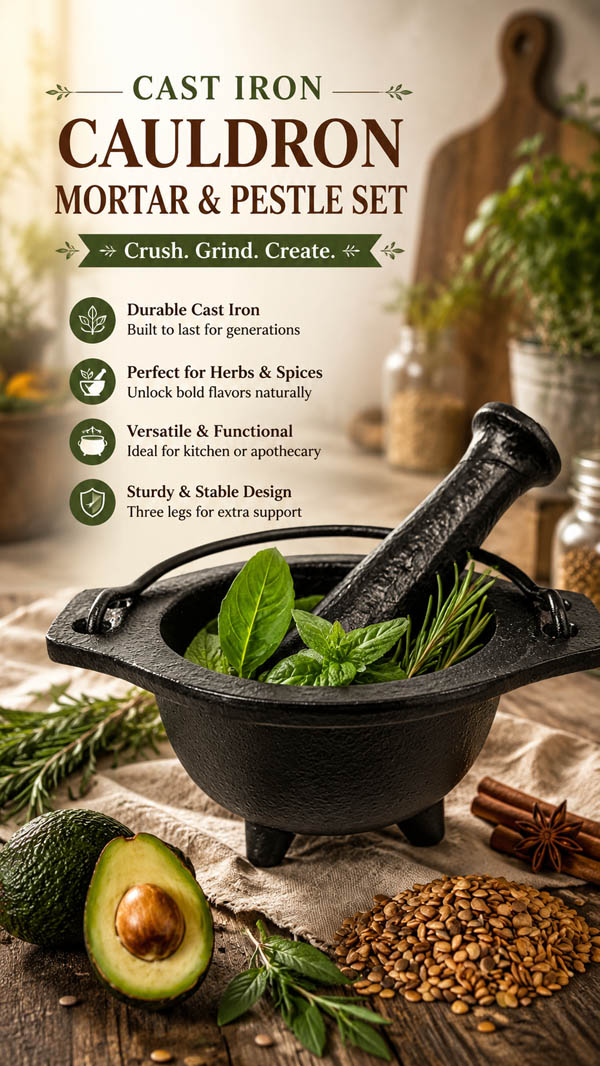
There is no separate curriculum for a male Green Witch. He does not receive an axe instead of a mortar and pestle or work only with Fire while women are assigned Water. His path might include:
- Growing rosemary, basil or mint on a kitchen windowsill
- Learning one neighborhood tree through all four seasons
- Keeping a garden, Moon or weather journal
- Creating an altar from stones, bark, seedpods or family objects
- Foraging responsibly—or deciding that leaving a plant rooted is the better offering
- Speaking, praying or sitting quietly with the spirit of a place
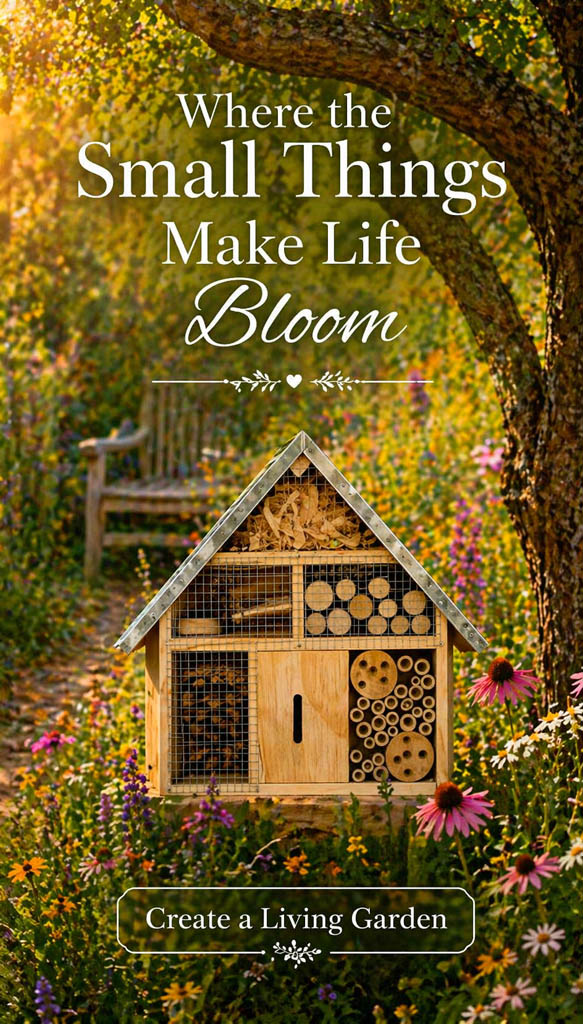
- Growing native plants and creating habitat for pollinators
- Sharing seasonal meals, rituals or garden work with people he loves
Some of these acts look spiritual from across the yard. Others look like someone watering thyme before work.
A ritual does not become more sincere because it is easily recognized as ritual. These small practices for ordinary days offer a gentle place to begin without making daily life theatrical.
A Green Witch garden can also begin with a container, a borrowed patch of soil or one indoor herb. Our guide to creating a garden with spiritual intention can help without requiring acres of land.
Are Earth, Water, Fire, Air and Spirit Gendered?
Some magical traditions describe particular forces as masculine or feminine, active or receptive, solar or lunar. These symbolic systems can be meaningful, but they need not become personality assignments handed out according to someone's body.
Every Person Meets the Full Elemental Circle
Earth is often described as maternal and fertile, yet Earth is also mountain, bone, boundary, endurance and winter ground too hard for a shovel.
Water can be receptive and gentle. It also floods, carves canyons and reshapes coastlines.
Fire can express action and will, but it also warms bread, protects a household and turns fallen wood into nourishing ash. Air carries ideas, pollen, breath and storms. Spirit holds what cannot be neatly divided at all.
Water is not reserved for women. Fire does not belong to men. Everyone encounters stability, emotion, courage, thought and sacred connection in different seasons of life. Our deeper exploration of Spirit and the elemental whole leaves room for that complexity.

The Divine Feminine Can Speak to Men
A man can honor a goddess, work with divine feminine energy or feel drawn to lunar symbolism without becoming less of a man. Receptivity, compassion, creation and intuition are not female possessions.
Likewise, a woman can honor a god, feel connected to solar energy or find meaning in the leaf-covered face of the Green Man without becoming less of a woman.
Some Green Witches know gods and goddesses as living divine beings. Others experience them as faces through which sacred nature becomes known. Still others work directly with land, ancestors, elements or plants and do not include deities at all.
Goddess spirituality can remain beautiful and central to a woman's path while also speaking deeply to a man. Our exploration of the many ways Green Witches approach the Goddess offers more room for that relationship.
Beyond the Binary
Not everyone is a man or a woman. Transgender, nonbinary and gender-fluid practitioners do not stand outside Green Witchcraft waiting for an exception to be made.
The living world is full of forms, relationships and transformations that refuse our neatest categories. We do not need to use a flower, animal or fungus to prove any human identity. Nature can simply teach us humility about insisting that life must resemble what is most familiar to us.
No gender places a person nearer to or farther from the sacred.

A Five-Element Practice Anyone Can Try
Before deciding whether you look like a Green Witch, sit or stand beside one living plant. It can be a tree, a garden herb, a houseplant or a weed growing through a sidewalk crack.
Meet One Plant Through the Five Elements
- Earth: Notice the soil, roots, pot, stone or ground holding the plant.
- Water: Observe the moisture present, absent or moving through its leaves and stems.
- Fire: Feel the warmth and light that allow it to grow.
- Air: Take one slow breath and watch the leaves respond to moving air.
- Spirit: Pause for relationship, prayer, presence, gratitude or the mystery of these forces becoming one living being.
You may experience the elements as sacred forces with energies or presences of their own. You may notice the relationships that keep one small life growing. The practice has room for wonder without requiring you to explain the wonder away.
Before you leave, ask:
What changes when I stop asking whether I look like a Green Witch and begin noticing how I relate to what is growing?

Belonging Without Erasing Anyone
An open path still asks us to enter with awareness. Welcome is not the absence of boundaries; it is the refusal to confuse one boundary with the entire landscape.
For Men Entering Green Witchcraft
A new male practitioner does not need to apologize for being present. He should arrive as any thoughtful beginner would: willing to learn, slow to claim authority and attentive to the people and places already offering wisdom.
- Build knowledge before expertise. Spiritual interest does not create botanical skill. Learn plant identification and safety.
- Know nearby nature. The tree outside your apartment may teach you more than a rare herb ordered for its correspondence.
- Practice reciprocity. Support habitat, take only what is abundant and leave living places healthier when possible.
- Respect the history women carry. Do not correct women for feeling protective of a symbol that helped them reclaim power.
- Listen to community boundaries. A particular coven or gathering may have specific membership requirements. One group's boundary does not define every form of Green Witchcraft.
Responsible practice also means refusing to turn nature into a spiritual supply cabinet. Our guide to reciprocal and sustainable Green Witchcraft explores how reverence becomes real through the choices we make outdoors.
For Women Widening the Circle
If the idea of a male Green Witch brings up a flicker of protectiveness, that does not automatically make you unwelcoming. It may reflect what the witch has carried for you: a reclaimed voice, a private spiritual language, a bond with other women or a symbol of survival.
You do not have to loosen that connection to recognize a man's authentic relationship with magic and nature. A woman can honor goddesses, gather with women and celebrate witchcraft as feminine power while understanding that the wider path is not female by definition.
Men, in turn, can enter without recentering every conversation around themselves. A man can join a goddess-honoring practice without asking it to hide the Goddess. He can learn from women without treating them as supporting characters in his discovery. Identity-specific spaces and a broadly inclusive spiritual path can coexist.
One contemporary example of this wider welcome appears in the Pagan Federation's stated commitment to equality across gender and sexual orientation. No organization speaks for all Pagans or witches, but the principle reflects something many practitioners already understand: spiritual dignity is not a scarce resource.
Practicing Beside One Another
A couple may tend the same garden bed while one speaks to plant spirits and the other studies soil health. Friends may share a seasonal meal while one offers a prayer and another watches evening light move across the table. A mother and son may observe the Moon together and write entirely different things in their journals.
Shared practice does not require identical belief. It asks for mutual respect and enough curiosity to let another person's experience remain their own.
No one needs a cloak, a dramatic forest portrait or a new name before beginning. No one owes the world a recognizable witch aesthetic.
A garden does not ask whether your hands look magical. It responds to whether you return, notice, learn and care.

Frequently Asked Questions About Men and Green Witchcraft
Can men be called witches?
Yes. Many modern practitioners use witch across genders. Use the identity an individual chooses rather than assuming a man needs a different word.
What is a male Green Witch called?
Usually, simply a Green Witch. “Male Green Witch” may describe part of someone's experience, but it is not a separate rank, tradition or required category.
Is a male witch called a warlock?
Not automatically. Some practitioners choose or reclaim warlock, while many male practitioners prefer witch. Ask rather than assign it.
Is Green Witchcraft the same as Wicca?
No. The two can overlap, but they are not interchangeable. Wicca is a diverse modern Pagan religion. Green Witchcraft is a nature-centered path or style of practice followed by some Wiccans, other Pagans, people combining it with another faith and people who do not belong to an organized religion.
Do male Green Witches have to worship a god instead of a goddess?
No. A practitioner's gender does not determine which deity may call to him. Some male Green Witches worship goddesses, some work with gods and goddesses, some honor spirits or ancestors, and some do not include deities in their practice.
Can someone practice Green Witchcraft without believing in literal magic?
Many people know Green Witchcraft as a genuinely magical relationship with the living world. Others engage through ritual, symbolism, ecology and seasonal awareness. Each can speak honestly about what they believe without belittling the other or presenting spiritual claims as scientific proof.
Can transgender and nonbinary people be Green Witches?
Yes. Green Witchcraft is not restricted by sex assigned at birth or gender identity. Transgender and nonbinary practitioners can build their own sincere relationships with plants, elements, land, magic and seasonal life.
Begin Where Something Is Growing
Choose one plant, tree or small patch of land. Visit it regularly for a month.
Notice where the light falls. Learn how the leaves change before rain. Watch for insects. Feel the soil before deciding whether it needs water. Introduce yourself if that feels right. Then listen.
Perhaps the name Green Witch will feel natural immediately. Perhaps it will take a season. Perhaps another name will fit you better.
The living world is not waiting for the perfect label.
It is already growing—and there is room beside it for all of us.